Follow Me On Social Media!
How to Make Ham Stock: Easy Broth for Flavorful Meals

Introduction to How to Make Ham Stock
In the world of culinary delights, learning how to make ham stock is a game changer, especially if you adore rich, flavorful broths. Imagine standing in your kitchen, surrounded by the warm aroma of simmering ham, aromatic herbs, and fresh vegetables. This is not just cooking; it’s crafting a wonderfully nourishing liquid that can elevate many dishes, from soups to risottos. Making ham stock is not merely about using leftovers effectively; it’s also about infusing your meals with a warmth and depth of flavor that store-bought versions simply can’t compete with.
So, why should you dive into making your very own ham stock? Firstly, it’s the unmistakable flavor that shines through when you use quality ingredients. The essence of the ham melds beautifully with vegetables like carrots, onions, and celery, creating a base that’s robust and comforting. Additionally, there’s a sense of accomplishment that comes from creating something homemade, adding a personal touch to your dishes.
What Makes Homemade Ham Stock So Special?
Homemade ham stock stands out for several compelling reasons:
-
Flavor Depth: When you take the time to slow-cook ham bones with aromatic vegetables and spices, the flavors deepen significantly. This stock becomes a versatile base that can be used in various recipes, creating layers of taste in soups, sauces, and stews.
-
Nutritional Benefits: A well-made stock is packed with nutrients extracted from the ham and vegetables. It provides a nourishing option that can be beneficial in times of illness or simply as a warm comforting bowl.
-
Cost-Effective: Using leftover ham bones cuts down on waste and maximizes your grocery budget. It’s a clever and sustainable way to ensure you get every ounce of flavor from your ingredients.
-
Customizable: One of the most enjoyable aspects of making ham stock is the freedom to add your favorite herbs and spices. Want a hint of rosemary or a dash of smoked paprika? The choice is yours, allowing you to create a stock that’s uniquely tailored to your palate.
Taking the plunge into making ham stock not only connects you more with your food but also enhances the overall enjoyment of your meals. Plus, it’s simpler than you might think! Get ready to be the star chef in your kitchen, one delicious stock at a time.

Key Ingredients for How to Make Ham Stock
Ham: The star of how to make ham stock is, of course, the ham itself. I recommend using a meaty ham bone; it’s rich in flavor and provides a hearty base. Whether you have leftover holiday ham or a store-bought ham shank, both work beautifully here.
Vegetables: Mirepoix is essential for building flavor, so I use chopped onions, carrots, and celery. Not only do they add depth, but they also complement the salty notes of the ham.
Garlic: A few cloves of roasted garlic bring an aromatic sweetness to the stock. Roasting mellows their sharpness, adding a lovely background flavor.
Herbs: Fresh thyme and bay leaves elevate the stock further, infusing it with earthy notes. Feel free to toss in leftover herb stems; they work wonders too!
Peppercorns: A handful of whole black peppercorns adds a subtle heat and complexity that rounds out the flavor of the stock.
Water: The essential ingredient for any stock, water is what pulls everything together. Use cold water as a base to start the extraction process. With each ingredient, you’ll be on your way to mastering how to make ham stock!
Why You’ll Love This Recipe
Making ham stock is like capturing the essence of a hearty family meal in a single pot. Picture this: after a festive gathering, instead of tossing out the leftover ham bone, you transform it into something magical. Using your leftover scraps thoughtfully not only reduces waste but also unlocks layers of flavor that are simply irresistible.
Here’s why you’ll adore this easy recipe:
-
Rich Flavor: The depth of flavor in homemade ham stock is unmatched. With savory hints from the ham bone and the aromatic notes from vegetables, each sip offers a warmth that store-bought versions can’t replicate.
-
Versatility: Knowing how to make ham stock empowers you to elevate countless dishes. From soups and stews to risottos and sauces, this stock serves as the perfect base ingredient. Imagine using it to create a cozy pea soup on a chilly night.
-
Healthier Alternative: Homemade stock is free from preservatives and additives often found in commercial varieties. You control the ingredients, ensuring a quality product that’s both nutritious and delicious.
-
Budget-Friendly: Turning leftover ham into stock is an economical choice. You’re not just saving money; you’re making one ingredient do the work of many in your culinary endeavors.
Embrace the joy of transforming your leftovers into a flavorful stock that’s both satisfying and resourceful. You won’t just love this recipe—you’ll cherish it.

Variations on Ham Stock
Exploring how to make ham stock opens up a world of delicious possibilities. Each variation can elevate your stock, adding unique flavors that complement different dishes. Here’s how you can customize your ham stock experience.
Herb-Infused Ham Stock
Consider incorporating fresh herbs like thyme, rosemary, or oregano. These add an aromatic depth that complements the savory notes of the ham. Toss a handful of your favorite herbs into the pot during cooking for a vibrant twist.
Veggie-Loaded Stock
For a hearty boost, throw in a medley of vegetables. Carrots, leeks, and celery are classics, but don’t shy away from experimenting with garlic or parsnips. These additions not only enhance the flavor but also provide a nutritional punch.
Smoky Ham Stock
If you’re craving a deeper, smokier flavor, add a few pieces of smoked bacon or a dash of liquid smoke. This variation is perfect for recipes that thrive on rich, bold flavors, like bean soups or stews.
Spicy Ham Stock
To spice things up, consider adding dried chilies or a splash of hot sauce. This variation suits those looking to bring an unexpected kick to their dishes, making it a great choice for jambalaya or chili recipes.
Feel free to experiment and find the combinations that excite your palate the most!
Cooking Tips and Notes for Ham Stock
Making ham stock can feel like a culinary treasure hunt; you’re transforming leftover bits into a savory elixir that elevates countless dishes. Here are some essential tips to ensure your stock is nothing short of fantastic.
Choosing Your Ingredients Wisely
- Quality Ham Bone: The backbone of great ham stock is a well-cooked bone. Opt for one with residual meat for added flavor. Ideally, use a bone from a smoked ham, enhancing that rich, smoky essence.
- Fresh Vegetables: Always include aromatic veggies like onions, carrots, and celery. They not only deepen the flavor but also contribute to a well-rounded stock. Roast them first to caramelize their natural sugars and intensify the taste.
Techniques for Success
- Simmer vs. Boil: Remember, a gentle simmer is key to developing a flavorful stock. Boiling can lead to a cloudy texture and a less refined taste.
- Flavor Development: Don’t rush the process. Allow your stock to simmer for several hours, which encourages the flavors to meld beautifully. Many chefs suggest a minimum of four hours, but overnight can yield even better results.
Storing Your Stock
- Freezing for Future Use: Pour your cooled stock into ice cube trays or freezer-safe containers. This way, you can easily grab a portion whenever a recipe calls for that extra boost of flavor.
Using these tips along with your homemade recipe for ham stock will ensure that your kitchen creations are bursting with deep, delicious flavors!
Serving Suggestions for Ham Stock
Creating your own ham stock opens up endless culinary possibilities, transforming simple dishes into flavorful sensations. This isn’t just a stock; it’s a robust foundation for meals that warm the heart and soul.
Use in Soups and Stews
Consider using your homemade ham stock as a base for hearty soups and stews. It can whisk up comfort food favorites like split pea or bean soup, infusing them with rich flavors. Just imagine a bowl of steaming, savory goodness!
Risottos and Pilafs
Replace water or broth in risottos and pilafs with ham stock for an unforgettable twist. The subtle richness enhances every grain of rice or bulgur, making a simple dish truly extraordinary.
Sauces and Gravies
Why not try incorporating ham stock into your gravies and sauces? A splash can elevate the taste, making your sauce the star of the meal.
Quinoa and Pasta Dishes
Adding it to quinoa salads or even pasta water will enrich them, ensuring every bite is infused with delightful depth.
With these simple serving suggestions, your ham stock is sure to become a beloved staple in your kitchen!
Time Breakdown for Ham Stock
Making your own ham stock is a rewarding venture that fills your kitchen with delicious aromas. Here’s how to organize your cooking time for the best results:
Preparation time
Begin your culinary journey with about 15 minutes of preparation. This includes gathering your ingredients, chopping vegetables, and getting your ham bones ready to create that rich, flavorful stock.
Simmering time
The real magic happens during the simmering phase, where you’ll let the stock gently bubble away for 2 to 4 hours. This step allows all the wonderful flavors from the ham and veggies to meld beautifully.
Total time
In total, you’ll spend around 2 hours and 15 minutes to 4 hours and 15 minutes making a delightful ham stock. Perfect for warming up your next meal or freezing for future use!
Nutritional Facts for Ham Stock
Creating ham stock not only enriches your meals with stunning flavors but also brings with it some impressive nutritional benefits. Understanding the nutritional content can make you appreciate your homemade stock even more.
Calories
A serving of ham stock typically contains around 40 calories. This low-calorie count allows you to enjoy the deep, savory taste without the guilt, making it a great base for soups and sauces.
Protein
Ham stock is a delightful source of protein, offering approximately 7 grams per serving. This protein content helps support muscle health and keeps you feeling full, making it a fabulous addition to your culinary repertoire.
Sodium
One of the key points to consider is sodium, as ham stock can be quite salty. A typical serving may have around 800-900 mg of sodium. It’s wise to keep this in mind if you’re monitoring your sodium intake, especially when adding seasonings or salt later in your recipe.
Ultimately, learning how to make ham stock can elevate your dishes without compromising your nutritional goals.
FAQs about Ham Stock
Making ham stock not only helps you utilize every bit of leftover ham but also transforms seemingly simple pieces into a rich, flavorful base for your dishes. As you embark on this culinary journey, it’s natural to have questions. Here are some frequently asked questions to guide you along the way.
Can I use leftover ham from a cooked ham?
Absolutely! In fact, using leftover ham from a cooked ham is one of the best ways to create a flavorful ham stock. Those bits and pieces you might usually toss can bring depth and character to your stock. Whether it’s the bone, scraps, or any leftover slices, adding them to your stock pot unlocks a treasure trove of savory flavors.
How long can I store ham stock?
Once you’ve made your ham stock, you can store it in the refrigerator for about 4 to 5 days. If you want to keep it longer, consider freezing it! Ham stock freezes well, and you can store it in airtight containers or freezer bags for up to 3 months. Just be sure to leave some room for expansion when it freezes.
What dishes can I use ham stock in?
The versatile nature of ham stock lets you incorporate it into various dishes. Here are a few ideas:
- Soups and Stews: Use it as a base for hearty soups or thick stews. It enhances flavors remarkably!
- Grains: Cook your rice, quinoa, or beans in ham stock for an extra layer of taste.
- Sauces: Incorporate it into gravies or sauces, giving you a unique twist to standard recipes.
With these tips in hand, you’re well on your way to mastering how to make ham stock and all its delicious possibilities!
Conclusion on Ham Stock
Creating ham stock is not just a culinary practice; it’s a way to extract maximum flavor and utilize every part of the ingredient. By simmering your leftover ham bones with aromatic vegetables and herbs, you’ll develop a rich, savory stock that can serve as a flavorful base for soups, stews, and sauces.
Reflecting on how to make ham stock, remember that patience is key. Allow yourself the time to let those flavors marry together beautifully. Once you have your stock prepared, feel free to store it in the fridge or freezer. You’ll be thankful when it’s time to whip up a comforting dish, knowing you’ve added a personal touch to your meal!
Print
Ham Stock
- Total Time: 8 hours 10 minutes
- Yield: 8 cups 1x
- Diet: Gluten Free
Description
A flavorful ham stock made from scraps and vegetables.
Ingredients
Scale
- ham scraps including the rind from the ham
- ham bones if available
- celery scraps including the leaves and root end of the celery
- carrot scraps including the carrot tops but not the leaves
- onions scraps or several onions, peeled and cut in half
- 12 cups water (or more if you have a really large stock pot)
- ham flavor base (optional)
Instructions
- Save scraps of ham or ham bones in the freezer until you have enough to make stock. Aim for at least 4 cups of scraps for a large pot.
- Use the largest soup pot you have for making stock. Put the ham scraps into the pot along with pieces of onion, celery, and carrots, and fill the pot with water.
- Turn the pot on to the lowest possible simmer and let the stock cook for 6-8 hours, adding a cup or two of water about once an hour.
- If using a slow cooker, reduce the stock on the stove after cooking in the slow cooker.
- After 6-8 hours, remove the ham pieces and vegetables with a slotted spoon and discard.
- Taste the stock; if the flavor is not strong enough, boil gently for 30 minutes or more.
- Use a ham flavor base to intensify the ham flavor.
- Skim off any scum that rises to the top.
- Strain the stock using a fine mesh strainer into a fat separator, or strain through cheesecloth.
- Let the stock cool in the refrigerator and scoop off any hardened fat on top.
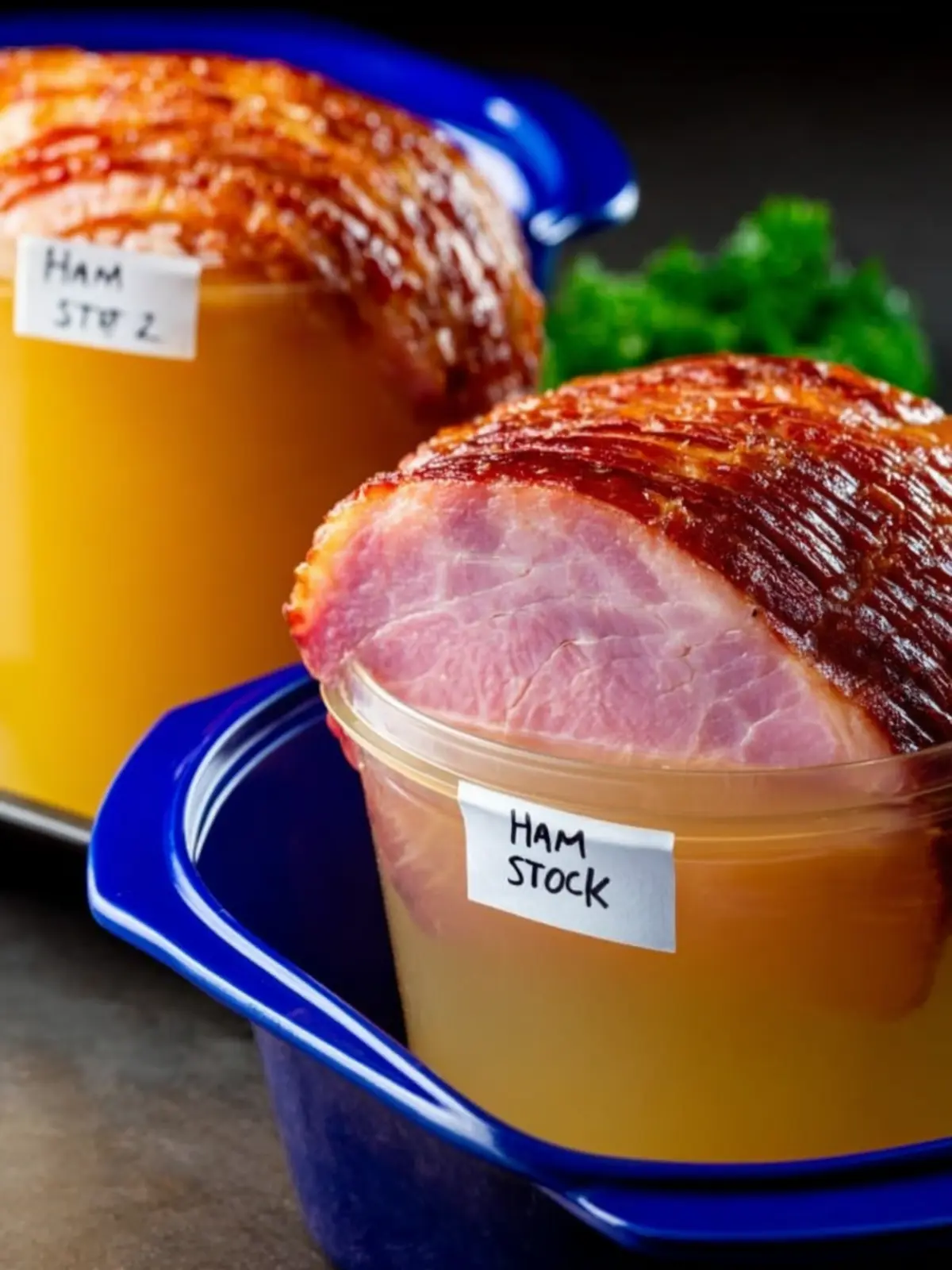
- Freeze the stock in 2 cup or 4 cup containers, labeling with the type and date.
- Stock can be stored frozen for 6-12 months.
Notes
- I prefer using Goya Ham Flavor Concentrate for added flavor.
- Label containers with a sharpie for easy identification.
- Prep Time: 10 minutes
- Cook Time: 8 hours
- Category: Soup
- Method: Stovetop
- Cuisine: American
Nutrition
- Serving Size: 1 cup
- Calories: 40
- Sugar: 0
- Sodium: 10
- Fat: 2
- Saturated Fat: 0
- Unsaturated Fat: 1
- Trans Fat: 0
- Carbohydrates: 2
- Fiber: 0
- Protein: 5
- Cholesterol: 10